How do taxes work when selling at craft fairs?
Most vendors handle both sales tax collection and income tax reporting for their craft fair revenue.
You sign up for your first fair and immediately see confusing terms like "sales tax" and "income tax." You worry you will miss a filing or charge the wrong amount during checkout.
The IRS generally requires individuals to report all income earned from business activities, regardless of the amount. While certain thresholds (like the $600 1099-K limit) trigger automatic reporting from payment processors to the IRS, they do not necessarily define a vendor's individual tax liability. Additionally, while business expenses and reinvestments may reduce taxable profit, they do not automatically eliminate tax obligations. It is important to consult IRS Publication 334 (Tax Guide for Small Business) or a CPA to understand how self-employment taxes and income reporting apply to your situation.
Set up a simple system: record every sale, tag the sales tax amount, and store receipts for expenses. Confirm your local requirements before each season, since rules vary by state and county. With clear records, filing becomes a routine task instead of a stressful scramble.
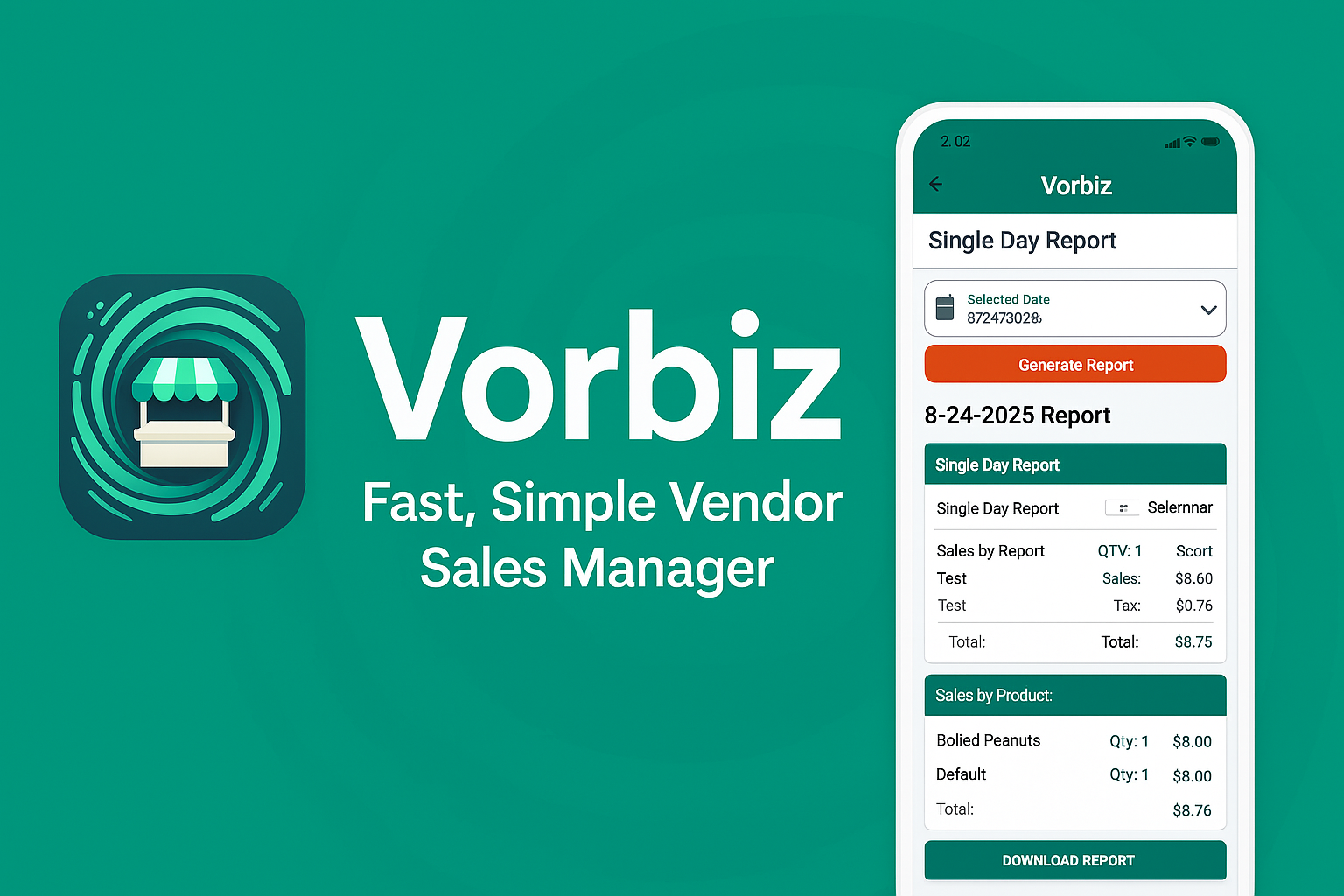
Stop Guessing. Start Growing.
Stop waiting until the end of the month to see if you made money. Get instant clarity on every sale, even without Wi-Fi.


LEGAL NOTICE: Information on Vorbiz.net is for educational purposes and not a substitute for professional legal, tax, or financial advice. Read Full Disclaimer