Any tips for tracking what sells during the day?
Track what sells without disrupting customer flow with a few practical methods.
Knowing what sells during a market is critical for restocking, pricing, and deciding which events are worth repeating. The challenge is tracking sales without disrupting customer flow.
Here are practical methods vendors use successfully.
Method 1: Simple tally tracking
Before the event, list your products on paper. Each time an item sells, make a quick tally mark.
This works best when:
- You sell a limited number of product types
- Sales volume is manageable
- You want rough counts rather than exact timestamps
Method 2: Quick digital notes
Some vendors use a phone or tablet to record sales in a basic list or notes app.
This allows you to:
- Capture item names or categories
- Review trends later
- Add notes like “sold out by noon” or “slow afternoon”
The downside is manual cleanup later.
Method 3: Item-level sale tracking
The most reliable approach is recording each sale as it happens, including cash transactions.
This lets you:
- See exactly what sold and when
- Identify best-sellers and slow movers
- Compare events objectively
A vendor-focused tracker like Vorbiz is designed for this scenario, letting you log sales quickly and review a clear day report afterward.
Tip: prioritize selling first
If tracking starts interfering with customers, pause and resume during a lull. Even partial data is better than guessing later.
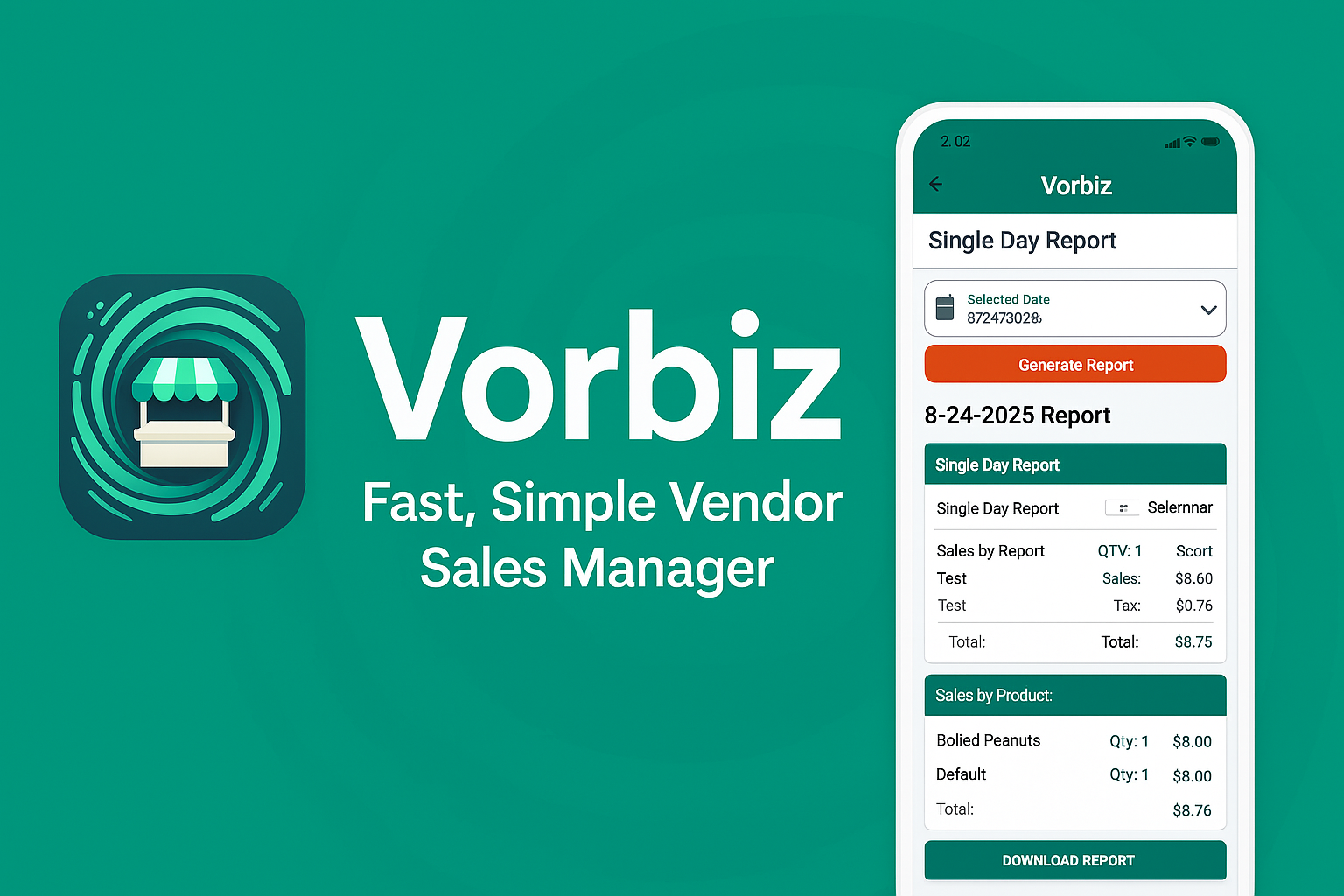
Stop Guessing. Start Growing.
Stop waiting until the end of the month to see if you made money. Get instant clarity on every sale, even without Wi-Fi.

